.webp?dpl=dpl_CkLMuQfs4KHnwuPj2rVvn9cpndMj)
When organizations expand, they often rely on different roles to generate growth and maintain long-term client relationships. Two such roles are Business Development Managers (BDMs) and Account Managers – positions that many confuse given their overlapping involvement with clients and revenue. In this blog post, we’ll break down the history, responsibilities, required skills, and career progressions of both roles. Whether you’re an individual figuring out which career path suits you best or a company looking to optimize your team structure, this guide will provide valuable insights.
Role Overviews
Business Development Manager Overview
- Background & History:
Traditionally, Business Development Managers have been the driving force in expanding market opportunities. Their origins lie in identifying new business opportunities, partnerships, or market segments that can fuel growth. - General Definition:
A Business Development Manager is primarily responsible for generating leads, forming strategic partnerships, and exploring untapped markets. Their work is dynamic and involves external networking, prospecting, and negotiating deals.
High-level Responsibilities
- Identifying and qualifying new business opportunities
- Building and nurturing strategic partnerships
- Negotiating contracts and closing deals
- Collaborating with marketing and product teams to align new ventures with business goals
- Tracking metrics to iterate on growth strategies
Account Manager Overview
- Background & History:
The role of an Account Manager evolved with the rise of client-centric business models. Focused on nurturing existing customer relationships, the Account Manager has become essential to client retention and satisfaction. - General Definition:
An Account Manager is tasked with managing existing client relationships, ensuring that customers receive the value they expect and often identifying upsell or cross-sell opportunities. Their work is more inward-focused, emphasizing relationship maintenance and service excellence.
High-level Responsibilities
- Managing day-to-day client interactions and serving as the primary point of contact
- Overseeing contract renewals and account expansions
- Coordinating with other teams to ensure customer satisfaction
- Addressing client challenges and proactively solving issues
- Monitoring account health with a focus on long-term retention
Key Responsibilities & Focus Areas
Business Development Manager
- New Opportunities: Emphasis is on lead generation, prospecting, and market research to identify emerging opportunities.
- External Focus: Their role is heavily external, often engaging in networking events, industry conferences, and partnership meetings.
Account Manager
- Client Retention: Focuses on nurturing and expanding relationships with established clients.
- Service & Support: They ensure clients stay satisfied, and work closely with internal teams to solve client issues and improve service delivery.
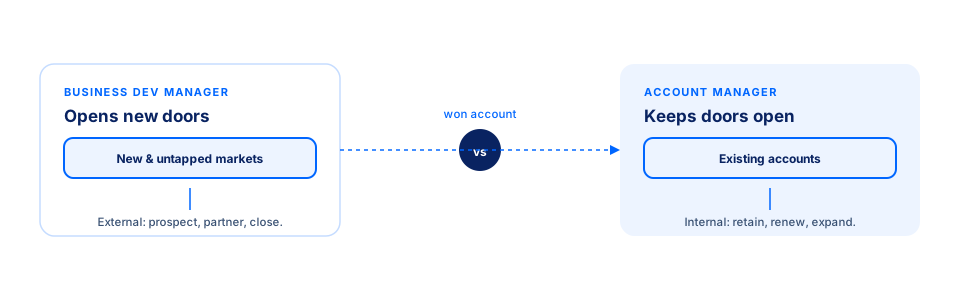
Both roles drive revenue, but while the BDM’s primary focus is on opening new doors, the Account Manager ensures that the existing doors remain open and welcoming.
Required Skills & Qualifications
Hard Skills
Business Development Manager
- Market analysis and lead-generation software proficiency
- Negotiation and contract formulation
- Familiarity with CRM and sales pipeline tools
Account Manager
- Proficiency with customer relationship management (CRM) systems
- Data analysis to monitor account performance
- Contract management and customer service platforms
Soft Skills
Business Development Manager
- Strategic thinking and the ability to forecast market trends
- Excellent networking and persuasive communication skills
- Adaptability to shifting market conditions
Account Manager
- Strong relationship-building and interpersonal skills
- Empathy and effective problem solving
- Consistency in managing client expectations and delivering feedback
Organizational Structure & Reporting
- Business Development Managers typically report to senior sales or strategy leaders and are often part of a broader business growth or sales division. They work closely with marketing and product management teams to align external opportunities with internal capabilities.
- Account Managers usually fall within the customer success or client services departments. They often report to a Director of Account Management or Client Success, collaborating with sales and support teams to ensure smooth client operations.
Overlap & Common Misconceptions
- Overlap:
Both roles are revenue-centric and require excellent communication with clients. In many organizations, a Business Development Manager might help transition a new client to the Account Manager for ongoing relationship management. - Misconceptions:
A common myth is that the Business Development Manager is simply an extension of sales or that the Account Manager’s role is purely administrative. In reality: - BDMs play a strategic role in shaping company growth.
- Account Managers often drive upsell and expansion opportunities while also ensuring client satisfaction.
Career Path & Salary Expectations
Career Path
- Business Development Manager: Often starts with roles in sales or market research, progressing to BDM. With experience, many move into higher leadership roles such as Director of Business Development or Chief Growth Officer.
- Account Manager: Might begin in support or junior account roles, advancing to Senior Account Manager, and eventually leadership roles like Director of Account Management or VP of Customer Success.
- Salary Expectations:
While salary ranges will vary by industry and region, both roles are considered well-compensated. Business Development Managers can sometimes earn higher variable pay tied to new revenue generation, whereas Account Managers may benefit from performance bonuses based on client retention and upsell success.
Choosing the Right Role (or Understanding Which You Need)
For Individuals
- If you thrive on pioneering new strategies, enjoy meeting new people, and are excited by the prospect of forging new partnerships, a role as a Business Development Manager may be ideal.
- If you prefer nurturing relationships, solving client challenges, and working to ensure long-term customer success, then an Account Manager position might be a better fit.
For Organizations
- Hire a Business Development Manager when you need fresh market strategies, innovative approaches to capturing new clients, or expansion into new territories.
- Bring an Account Manager on board to solidify client relationships, reduce churn, and maximize the lifetime value of your current customer base.
Additional Resources
- Check out our Interview Guides for tailored questions that help you evaluate candidates for both roles.
- Explore our Interview Questions specifically designed for account management, and learn more about evaluating business development talent.
- For those looking to streamline their hiring process using AI, sign up for Yardstick’s platform at our Signup Page.
Conclusion
Understanding the nuanced differences between a Business Development Manager and an Account Manager is crucial for both career seekers and organizations. While both roles drive growth and revenue, the former is focused on generating and capturing new opportunities, whereas the latter ensures that established clients continue to thrive with the company. By clearly distinguishing these roles and aligning them with your strategic goals, you can foster a more effective and harmonious growth environment.
Happy hiring and best of luck navigating your career or making your next strategic hire!