.webp?dpl=dpl_CkLMuQfs4KHnwuPj2rVvn9cpndMj)
In today's fast-paced business world, understanding the nuances of executive roles is crucial for organizational success. Two key positions that often spark confusion are the Chief Strategy Officer (CSO) and the Chief Business Officer (CBO). While both are vital to a company's growth, their responsibilities and focuses differ significantly. This comprehensive guide will demystify these roles, helping you understand their unique contributions to organizational success.
The Strategic Visionary: Chief Strategy Officer (CSO)
Role Overview
The Chief Strategy Officer is a relatively new addition to the C-suite, emerging as businesses faced increasingly complex and dynamic environments. As the architect of the future, the CSO is responsible for:
- Developing and refining corporate strategy
- Analyzing market trends and competitive landscapes
- Facilitating strategic planning across departments
- Overseeing strategic initiative execution
- Monitoring and adjusting strategic goals
The CSO acts as a key advisor to the CEO and board, providing crucial insights on major strategic initiatives.
Key Focus Areas
- Long-term vision and future positioning
- Competitive advantage strategies
- External orientation (market, competition, trends)
- Strategic direction and investment priorities
The Operational Dynamo: Chief Business Officer (CBO)
Role Overview
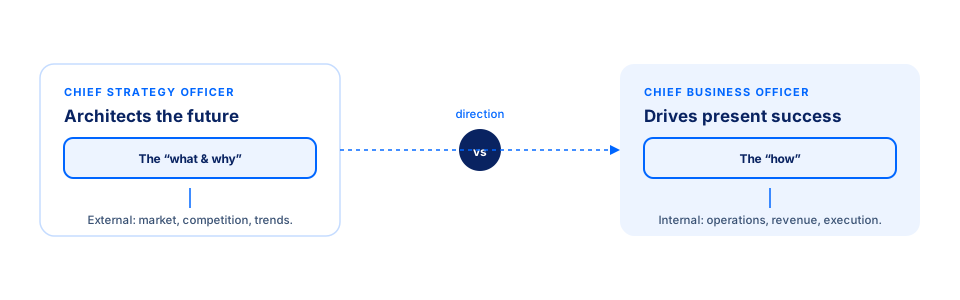
The Chief Business Officer role has evolved to manage and optimize core business functions. While the CSO focuses on the "what" and "why," the CBO concentrates on the "how." Their primary responsibilities include:
- Overseeing key business operations
- Driving revenue growth and exploring new opportunities
- Managing partnerships and strategic alliances
- Aligning business strategy with operational execution
- Improving business processes and performance
Key Focus Areas
- Operational efficiency and business performance
- Revenue growth and business development
- Internal orientation (processes, performance, execution)
- Operational improvements and resource allocation
CSO vs CBO: A Side-by-Side Comparison
| Aspect | Chief Strategy Officer (CSO) | Chief Business Officer (CBO) ||--------|------------------------------|------------------------------|| Primary Focus | Long-term vision and competitive advantage | Operational efficiency and revenue growth || Key Tasks | Strategic planning, market analysis | Business development, operational management || Orientation | External (market, competition, trends) | Internal (processes, performance, execution) || Decision Making | Strategic direction, investment priorities | Operational improvements, resource allocation |
Essential Skills and Qualifications
Both roles require a unique blend of hard and soft skills:
Hard Skills
CSO:
- Strong analytical capabilities
- Data interpretation and trend identification
- Business model and financial analysis expertise
CBO:
- Business operations and finance knowledge
- Sales and revenue growth experience
- Partnership management skills
Soft Skills
Both roles demand exceptional leadership and communication skills. CSOs need to be visionary and persuasive, while CBOs must excel in execution and collaboration.
To build strong teams for these roles, effective interviewing is crucial. Learn more about creating impactful interview guides with Yardstick's Interview Orchestrator.
Organizational Structure and Reporting
Both CSOs and CBOs typically report directly to the CEO. However, their teams and decision-making focus differ:
- CSOs work closely with strategic planning analysts and market research specialists
- CBOs oversee various business units like sales, marketing, and operations
Career Paths and Salary Expectations
The journey to these C-suite positions can vary:
CSO Path: Often includes roles in management consulting, strategic planning, or corporate development.
CBO Path: Typically involves experience in sales leadership, marketing management, or general management.
Both roles command high salaries, reflecting their significant impact on organizational success.
Choosing the Right Role for Your Organization
When deciding between a CSO and CBO, consider your organization's specific needs:
- Rapidly growing companies in dynamic markets might benefit more from a CSO
- Mature organizations focused on optimizing operations may prioritize a CBO
In some cases, particularly in larger organizations, both roles can coexist and work collaboratively.
To help define the right roles for your team, explore Yardstick's AI job description generator.
Leveraging AI in Your Hiring Process
As you navigate these complex roles, consider how AI can enhance your hiring process. Yardstick offers AI-enabled hiring tools that can streamline your search for top-tier CSO and CBO candidates.
Additional Resources
To deepen your understanding of these critical roles:
- Generate tailored job descriptions with Yardstick's AI Job Description Generator
- Explore leadership interview questions at Yardstick's Interview Questions
- Create custom interview guides with Yardstick's AI Interview Guide Generator
- Compare other C-suite roles, like DevOps Engineer vs. Site Reliability Engineer (SRE)
Ready to revolutionize your hiring process? Sign up for Yardstick today and take the first step towards building your dream team.
Conclusion: Architecting the Future vs. Driving Present Success
While both CSOs and CBOs are indispensable to modern organizations, their roles are distinct. The CSO architects the future, focusing on long-term strategy and competitive advantage. The CBO drives present success, concentrating on operational efficiency and revenue growth.
Understanding these distinctions is crucial for both aspiring executives and organizations building leadership teams. By clearly defining each role's responsibilities and focus areas, companies can ensure they have the right leadership mix to navigate today's complex business landscape and achieve sustainable success.