.webp?dpl=dpl_5xtBof1hGo35mqXA327c5e7WiW8n)
In today's rapidly evolving tech world, understanding the nuances between different engineering roles is crucial for both career advancement and building effective teams. Two roles that often spark confusion are Infrastructure Engineer and Platform Engineer. While both are pillars of modern DevOps practices, their focuses and responsibilities differ significantly. This comprehensive guide will demystify these roles, helping you make informed decisions about your career path or hiring strategy.
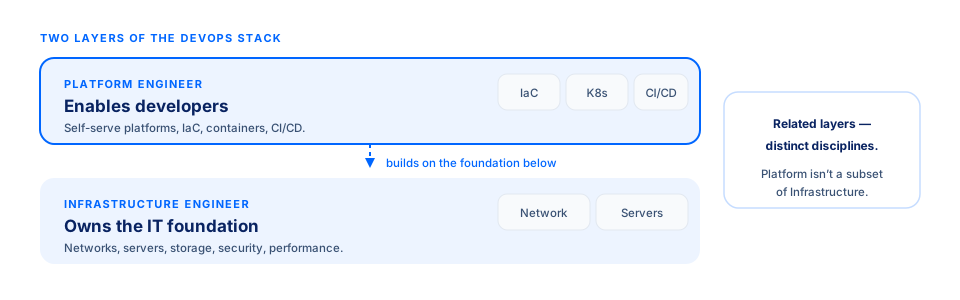
The Foundation Builders vs. The Developer Enablers
Infrastructure Engineer: The Bedrock of IT
Infrastructure Engineers are the architects of an organization's IT foundation. With roots in traditional systems administration, their role has evolved to meet the demands of increasingly complex technology landscapes.
Key Responsibilities:
- Designing and implementing robust network infrastructures
- Managing and optimizing server environments
- Implementing cutting-edge storage solutions
- Ensuring ironclad system security
- Monitoring and fine-tuning system performance
Infrastructure Engineers are the guardians of stability, security, and scalability. They work tirelessly behind the scenes to ensure that the technological foundation of an organization is rock-solid.
Platform Engineer: The Bridge to Efficiency
Platform Engineers emerged as the missing link between infrastructure and application development. Born from the DevOps revolution, these professionals focus on creating seamless, productive environments for developers.
Key Responsibilities:
- Building and maintaining developer-centric platforms
- Automating infrastructure provisioning through Infrastructure-as-Code
- Orchestrating containerization platforms
- Implementing and optimizing CI/CD pipelines
- Providing developer-friendly tools and support
Platform Engineers are the catalysts of productivity, abstracting away infrastructure complexities to empower developers and accelerate delivery cycles.
Skills and Qualifications: The Toolboxes Compared
Infrastructure Engineer's Arsenal
Hard Skills:
- Deep knowledge of operating systems (Linux, Windows)
- Networking expertise (TCP/IP, DNS, routing)
- Hardware proficiency
- Security best practices
- Scripting and automation (Bash, Python, PowerShell)
Certifications: CompTIA Network+, Security+, AWS Certified SysOps Administrator
Soft Skills:
- Meticulous problem-solving
- Attention to detail
- Clear communication
Platform Engineer's Toolkit
Hard Skills:
- Cloud computing mastery (AWS, Azure, GCP)
- Containerization technologies (Docker, Kubernetes)
- Infrastructure-as-Code (Terraform, CloudFormation)
- CI/CD proficiency (Jenkins, GitLab CI)
- Programming skills (Python, Go)
Certifications: Certified Kubernetes Administrator (CKA), AWS Certified DevOps Engineer
Soft Skills:
- Collaborative mindset
- Customer-focused approach
- Strategic thinking
Organizational Fit: Where Do They Belong?
Infrastructure Engineers typically reside within IT Operations or Infrastructure departments, reporting to IT Managers or CTOs. Their decision-making often revolves around maintaining stability and security.
Platform Engineers, on the other hand, may be part of DevOps teams or embedded within development organizations. They often report to Directors of Platform Engineering or VPs of Engineering, with a more collaborative decision-making process that involves input from development teams.
Debunking Common Myths
- Myth: One role is more technical than the other.Reality: Both roles require deep technical expertise in different domains.
- Myth: Platform Engineering is a subset of Infrastructure Engineering.Reality: While related, Platform Engineering is a distinct discipline focused on developer enablement.
- Myth: These roles don't overlap.Reality: There are areas of shared responsibility, especially in smaller organizations.
Charting Your Career Path
Infrastructure Engineers often progress from roles like Systems Administrator or Network Engineer, potentially advancing to Infrastructure Manager or Architect positions.
Platform Engineers frequently transition from Software Development or DevOps backgrounds, with career paths leading to Senior Platform Engineer or Director of Platform Engineering roles.
Both roles offer competitive salaries, with Platform Engineers often commanding higher compensation due to the high demand for cloud and DevOps skills.
Making the Right Choice: For Individuals and Organizations
When deciding between these paths, consider your passions:
- Do you thrive on building robust, secure foundations? Infrastructure Engineering might be your calling.
- Are you driven by enhancing developer productivity and streamlining processes? Platform Engineering could be your ideal path.
For organizations, the choice depends on your priorities:
- Building a secure, stable IT foundation? Invest in Infrastructure Engineers.
- Accelerating development cycles and empowering developers? Platform Engineers are key.
Ideally, a balanced team incorporates both roles, creating a synergy between solid infrastructure and efficient development processes.
Resources to Fuel Your Journey
To deepen your understanding and improve your hiring process:
- Craft precise job descriptions with our AI Job Descriptions tool.
- Explore role-specific examples for Infrastructure Engineer and Platform Engineer.
- Generate targeted interview questions using our AI Interview Question Generator.
- Access role-specific interview questions for effective candidate assessment.
- Structure your interviews with our comprehensive interview guides.
- Gain insights on improving your hiring process from our blog, including tips on raising the talent bar in your organization.
Ready to revolutionize your engineering team? Sign up for Yardstick and transform your hiring process today.
Conclusion: Embracing the Synergy
While Infrastructure Engineers and Platform Engineers have distinct focuses, both are indispensable in modern tech organizations. Infrastructure Engineers ensure a robust, secure foundation, while Platform Engineers drive developer productivity and innovation. By understanding and leveraging the unique strengths of each role, organizations can build high-performing, efficient technology teams that drive business success in the digital age.