.webp?dpl=dpl_HxJJvrs2Y1Fb5ArzR4tc15NrMoWW)
In today's dynamic business landscape, understanding the nuances between leadership roles is crucial for career advancement and organizational success. Two positions that often cause confusion are Operations Manager and General Manager. This comprehensive guide will demystify these roles, helping you make informed decisions about your career path or organizational structure.
The Evolving Landscape of Business Leadership
As businesses grow more complex, the roles of Operations Manager and General Manager have adapted to meet new challenges. Let's explore how these positions have evolved and what they mean in today's corporate world.
Operations Manager: The Efficiency Expert
The Operations Manager role has transformed from a manufacturing-focused position to a critical function across various industries. Today, an Operations Manager is the driving force behind organizational efficiency and process optimization.
Key Responsibilities:
- Streamlining daily operations and workflows
- Implementing and monitoring operational policies
- Managing resources and budgets within their domain
- Spearheading process improvements
- Ensuring regulatory compliance
General Manager: The Strategic Visionary
The General Manager role has expanded from overseeing a single business unit to potentially leading entire organizations. A GM is responsible for the overall performance and strategic direction of their designated area.
Key Responsibilities:
- Developing and executing strategic plans
- Overseeing financial performance and budgeting
- Managing multiple departments and functions
- Driving business growth and profitability
- Representing the business to stakeholders
Diving Deeper: Key Differences in Focus Areas
While both roles are crucial for organizational success, their primary focus areas differ significantly:
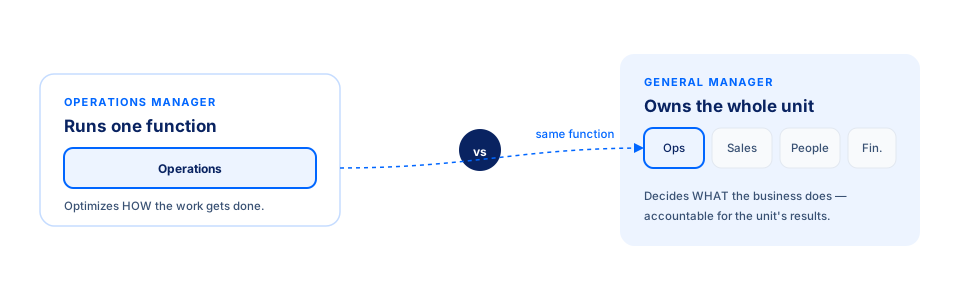
- Operations Manager: Concentrates on the 'how' - optimizing internal systems, improving workflows, and ensuring smooth execution.
- General Manager: Focuses on the 'what' and 'why' - aligning business goals with company strategy, driving revenue growth, and navigating market challenges.
Essential Skills and Qualifications
Hard Skills
Operations Manager:
- Industry-specific technical skills (e.g., supply chain management, IT infrastructure)
- Process improvement methodologies (e.g., Lean Six Sigma)
- Relevant certifications or degrees in operations management
General Manager:
- Broad business acumen
- Financial management expertise
- Strategic planning skills
- Often requires an MBA or equivalent experience
To assess these skills effectively during the hiring process, consider using our AI Interview Guide Generator to create tailored interview guides.
Soft Skills
Both roles require strong leadership and communication skills, but with different emphases:
Operations Manager:
- Hands-on team management
- Detail-oriented communication
- Collaborative problem-solving
General Manager:
- Visionary leadership
- Strategic communication
- Stakeholder management
For behavioral questions to assess these soft skills, try our AI Interview Question Generator.
Organizational Structure and Reporting Lines
Understanding where these roles fit in the organizational hierarchy is crucial:
- Operations Manager: Typically reports to a Director of Operations, VP of Operations, or General Manager
- General Manager: Usually reports directly to the CEO or a senior executive
Common Misconceptions and Overlaps
It's important to address some common myths:
- One role isn't inherently more technical than the other
- The Operations Manager role isn't just a stepping stone to General Manager
- In smaller organizations, responsibilities may overlap significantly
Career Paths and Salary Expectations
Operations Manager Path:
- Often starts in specialist or supervisory roles within operations
- Progresses through demonstrated success in process improvement and team management
General Manager Path:
- May involve experience across various functional areas (sales, marketing, finance)
- Could progress through roles like Regional Manager or Director before reaching GM
Salary expectations vary widely based on industry, company size, and location, with General Managers typically commanding higher salaries due to their broader responsibilities.
Choosing the Right Role for You or Your Organization
When deciding between these career paths or which role to hire for, consider:
- Individual strengths and interests
- Organizational size and structure
- Current business needs (efficiency improvements vs. strategic growth)
To help define specific responsibilities for each role, use our job description examples as a starting point.
Additional Resources
For more insights on effective hiring practices, check out our blog post on why interview guides are essential for your hiring team.
Conclusion: Empowering Your Leadership Journey
Understanding the distinctions between Operations Manager and General Manager roles is crucial for both individual career planning and effective organizational design. By recognizing these differences, you can make informed decisions that align with your skills, aspirations, and business needs.
Ready to elevate your hiring process for these critical leadership roles? Sign up for Yardstick today and harness the power of AI to make smarter hiring decisions.